









Power Steering Fluid Leak Repair Cost Guide



You can expect power steering fluid leak repairs to range from $100 to $220, depending on the issue’s severity.
Simple hose replacements typically cost under $150, while pump replacements run around $200 to $220.
Inspections may add $63 to $92, and full system overhauls range between $500 and $650.
Timely diagnosis prevents further damage and costly repairs.
Understanding causes, signs, and maintenance options will help you manage costs and extend your steering system’s life.
Table
- Main Points
- Importance of Power Steering Fluid Maintenance
- Common Causes of Power Steering Fluid Leaks
- Signs and Symptoms of a Power Steering Fluid Leak
- Diagnostic Process for Power Steering Fluid Leaks
- Average Costs for Power Steering Fluid Leak Repairs
- Repair Options for Power Steering Fluid Leaks
- Risks of Driving With a Power Steering Fluid Leak
- Preventative Tips to Avoid Power Steering Fluid Leaks
- Frequently Asked Questions
- Final Thoughts
Main Points
- Power steering fluid leak repairs typically cost between $100 and $220 depending on severity and parts involved.
- Replacing hoses ranges from $60 to $150 plus up to $100 labor fees.
- Power steering pump replacement generally costs $200 to $220 including parts and labor.
- Inspection fees for identifying leaks usually fall between $63 and $92.
- Complete system repairs can range from $500 to $650, depending on damage extent.
Importance of Power Steering Fluid Maintenance

Because maintaining proper power steering fluid levels directly affects your vehicle's steering performance, you need to regularly check and top off the fluid to prevent increased heat and friction that can damage the system. Proactive maintenance helps you avoid power steering fluid leaks, which, if ignored, can escalate leak repair cost and lead to system failure. Performing fluid flushes every 50,000 to 75,000 miles guarantees contaminants don’t compromise the power steering system’s components. Using the manufacturer-specified fluid is critical; the wrong fluid can cause pump damage. Also, monitoring the serpentine belt condition and minimizing aggressive steering reduces unnecessary stress. By prioritizing these maintenance tasks, you liberate yourself from costly repairs and preserve precise, reliable steering control.
Common Causes of Power Steering Fluid Leaks
You’ll often find power steering fluid leaks stem from aging components that cause O-rings and seals to lose flexibility and break down. Cracks or holes in supply and pressure hoses also contribute greatly to fluid loss and reduced system efficiency. Understanding these common failure points helps you spot issues early and maintain ideal steering performance.
Aging Components Breakdown
When components in your power steering system age, their materials lose flexibility, especially the O-rings and seals, which can develop cracks or become brittle. This degradation leads to power steering leaks as fluid escapes through compromised seals. Aging components also contribute to fluid leakage by allowing fragments from broken seals to contaminate the fluid, hindering system performance. Over time, natural wear causes hoses to weaken; small holes or cracks form, increasing leakage risk. While hose and seal failures are specific issues, the overall breakdown of aging parts demands your attention. To maintain freedom of movement and control, you must inspect regularly and address signs of wear promptly. Sometimes, the best course is to replace the hose entirely to prevent further fluid leakage and restore system integrity.
Hose and Seal Failures
Although power steering systems are designed for durability, hose and seal failures remain among the most common causes of fluid leaks. Over time, seals lose flexibility, and hoses develop holes, compromising the system's integrity. You need to watch for:
 How to Locate a Coolant Leak Step-by-Step
- Visible damage or cracks on hoses indicating wear
- Fluid accumulation near seals or hose connections
- Reduced seal elasticity causing persistent leaks
- Sudden fluid loss requiring hose and seal replacement
Broken seals often require you to replace the entire hose to restore proper sealing. Regular inspections help you identify these issues early, preventing extensive damage and costly repairs. By maintaining your power steering hoses and seals, you guarantee fluid containment and system reliability, granting you freedom from unexpected breakdowns and expensive fixes.
Signs and Symptoms of a Power Steering Fluid Leak
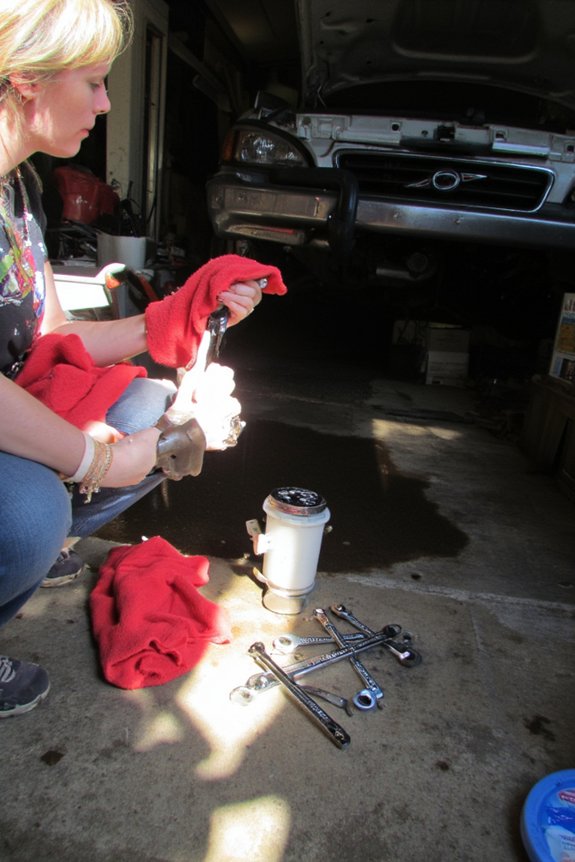
If you notice your power steering fluid level dropping consistently, it’s a clear sign of a leak. You may also experience increased difficulty steering, especially during sharp turns, indicating fluid loss affecting system performance. Additionally, visible fluid spots or puddles under your vehicle can help you pinpoint the leak’s location early.
Fluid Level Drops
Detecting a drop in your power steering fluid level signals a potential leak that can impair your steering system's performance and safety. When your steering pump is leaking, it directly affects fluid levels, increasing the cost to fix if left unchecked. To identify this issue early, watch for these signs:
- Whining noises during steering, indicating low power steering fluid
- Difficulty steering in tight maneuvers despite no other mechanical faults
- Visible fluid accumulation under your vehicle or on the driveway
- Consistently low fluid levels despite regular top-ups
Monitoring these symptoms helps you act promptly, avoiding severe damage or expensive repairs. Addressing a steering pump leaking early protects your vehicle’s steering integrity and keeps costs manageable.
Steering Difficulty Increases
When your power steering fluid leaks, you’ll notice increased resistance while turning the wheel, making steering more difficult. This added effort often signals a compromised power steering system leak, reducing hydraulic pressure essential for smooth operation. You might also hear whining noises from the power steering pump, indicating it’s struggling due to insufficient fluid. Steering may feel jerky or delayed, especially at low speeds or during parking maneuvers. Ignoring these symptoms can escalate repair costs, as the pump and other components endure undue stress. Promptly addressing a steering leak fix not only restores ease of control but also prevents costly damage. Understanding these signs empowers you to act swiftly, preserving your vehicle’s performance and your driving freedom.
Visible Fluid Spots
Increased steering difficulty often coincides with visible fluid spots beneath your vehicle, signaling a potential power steering fluid leak. These spots usually appear on your driveway or garage floor and indicate compromised steering control. To effectively identify and address a power steering leak, watch for:
- Reddish or amber fluid pools with an oily, sticky texture
- Fluid accumulation directly beneath the front of your vehicle
- Frequent need to top off power steering fluid
- Noticeable decrease in steering responsiveness
Ignoring visible fluid spots risks further damage and costly repairs. Catching leaks early lets you fix a power steering issue before it worsens, preserving your vehicle’s steering control and safety. Regular inspections empower you to maintain freedom on the road without unexpected steering failures.
Diagnostic Process for Power Steering Fluid Leaks
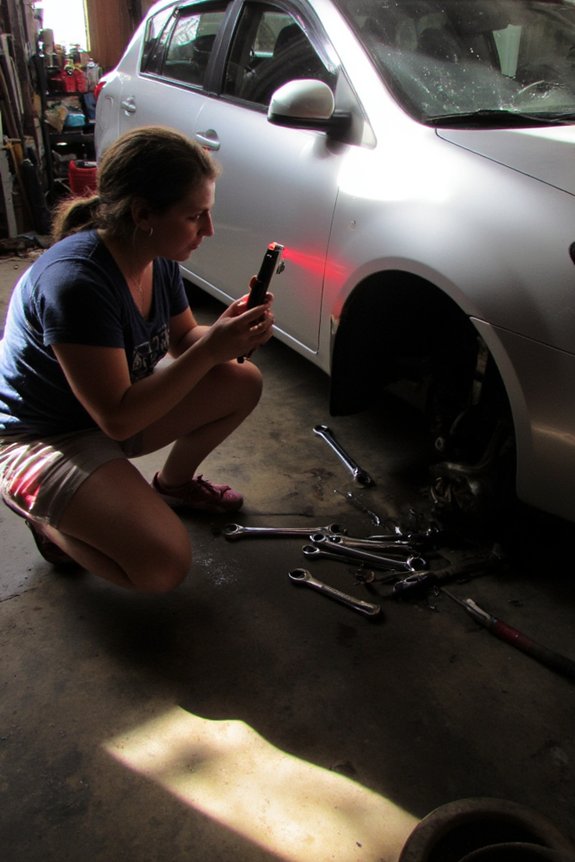
A thorough diagnostic process for power steering fluid leaks starts with your technician gathering detailed information about your driving habits and any leak symptoms you've noticed. They then inspect the fluid system, checking fluid levels and examining the hydraulic system for damage or wear. The technician evaluates the power steering pump belt’s condition and tension, as it influences fluid flow and system pressure. Bleeding air from the system may be necessary to guarantee accurate readings. Using pressure valves and gauges, the technician measures system pressure and listens for abnormal noises, pinpointing leaks or mechanical failures. This precise diagnostic process guarantees targeted repairs, freeing you from uncertainty and restoring your vehicle’s steering reliability efficiently.
Average Costs for Power Steering Fluid Leak Repairs
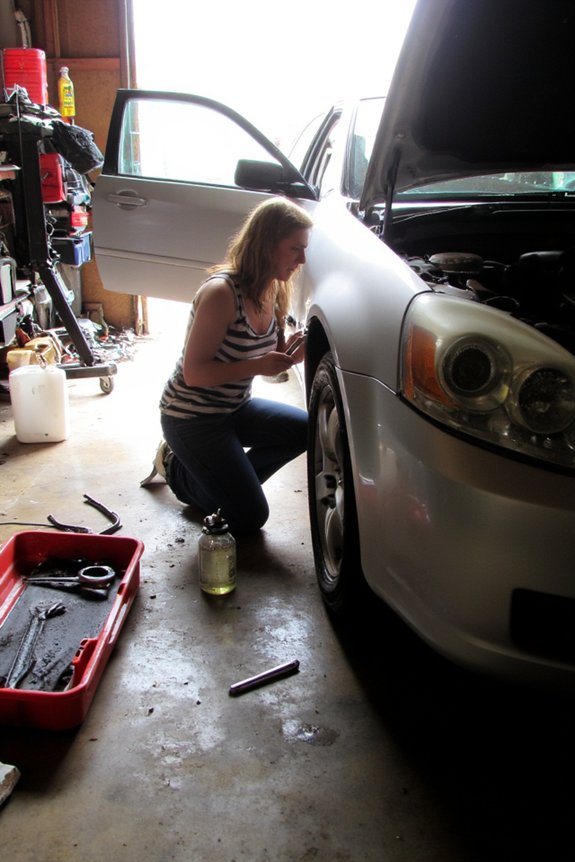
Repairing power steering fluid leaks typically costs between $100 and $220, depending on the specific issue and repair location. Understanding these costs helps you take control of your vehicle’s maintenance without overspending. Key factors include:
Power steering fluid leak repairs generally range from $100 to $220, depending on the issue and location.
How to Spot Brake Fluid Leak Symptoms
- Replacing power steering hoses costs $60 to $150, with labor up to $100.
- Power steering pump replacement ranges from $200 to $220.
- Inspection fees for leaks typically fall between $63 and $92.
- Additional repairs might increase total costs if other components are damaged.
Repair Options for Power Steering Fluid Leaks
Although power steering fluid leaks can stem from various sources, addressing them effectively requires identifying the faulty components. Your repair options range from replacing a single component, like a hose or the power steering pump, to a complete system overhaul. Costs vary accordingly, with hose repairs costing under $150, while power steering pump repairs fall within a few hundred dollars.
| Component | Estimated Repair Cost |
|---|---|
| Hose Replacement | $60 - $150 |
| Power Steering Pump | $200 - $220 |
| Complete System Repair | $500 - $650 |
Selecting the right repair option depends on the leak’s origin and severity. Temporary fixes like additives may stall repairs but professional diagnostics guarantee lasting liberation from leaks.
Risks of Driving With a Power Steering Fluid Leak
When you drive with a power steering fluid leak, you risk losing critical steering control, especially during turns or sudden maneuvers, which can sharply increase your chances of an accident. Ignoring this leak compromises your vehicle’s steering power, leading to:
- Reduced steering responsiveness, making navigation unpredictable and unsafe
- Overheating and accelerated wear of steering components, escalating repair needs
- Potential failure of the power steering pump, causing complete loss of steering assistance
- Increased repair costs as further damage accumulates from continued leaks
Addressing a power steering fluid leak promptly preserves steering integrity and prevents costly repairs. Don’t let a minor leak jeopardize your control and freedom on the road—acting quickly guarantees your power steering system operates reliably and safely.
Preventative Tips to Avoid Power Steering Fluid Leaks
To prevent power steering fluid leaks, you should regularly check fluid levels and inspect system components for wear. Visually inspect the serpentine belt for cracks or damage, as a compromised belt can strain the power steering system. Schedule fluid flushes every 50,000 to 75,000 miles to eliminate contaminants that accelerate wear. Avoid turning the steering wheel fully while stationary to reduce stress on seals and hoses. When addressing repairs, select high-quality replacement parts that exceed OEM standards to guarantee durability and prevent recurring leaks. These preventative tips empower you to maintain system integrity, avoid costly repairs, and retain control over your vehicle’s steering performance. Consistent maintenance and mindful operation are your best defenses against power steering fluid leaks.
Frequently Asked Questions
How Expensive Is It to Fix a Power Steering Leak?
You’ll need efficient leak detection methods and know power steering maintenance basics. Comparing fluid types helps. Use repair DIY tips cautiously to save costs, but professional repairs guarantee lasting fixes and protect your system’s integrity.
Is It OK to Drive With Leaking Power Steering Fluid?
Sure, if you enjoy sudden death-defying spins, drive with leaking power steering fluid! But seriously, don’t ignore safety concerns or driving symptoms. Different fluid types demand proper care; temporary fixes won’t liberate you from costly damage.
How Hard Is It to Fix a Power Steering Leak?
Fixing a power steering leak varies; you can tackle common causes like hose cracks using DIY repairs and leak detection methods like visual checks or dye tests, but complex issues often need professional services for precise diagnosis and repair.
How Much Does It Cost to Replace a Power Steering Pump Seal?
Picture your power steering as a well-oiled machine; seal replacement typically costs $200-$220. Cost factors include labor and model specifics. You’ll want precision in pump repair to regain smooth, leak-free control on the road.
Final Thoughts
Don’t let a power steering fluid leak silently drain your vehicle’s lifeblood. Like a slow drip eroding a canyon, even a small leak can carve costly damage over time. By spotting signs early and addressing repairs promptly, you keep your steering smooth and responsive. Think of maintenance as the shield that guards your steering system’s heart—protect it, and your driving experience will stay sharp, safe, and efficient for miles to come.
 How to Identify Fuel Leak Sources in Vehicles
Reliable Floor Jacks on a Budget: Best Picks for Under $150
Top-Rated Floor Jacks Over $100: Built for Professionals, Priced for Smart Buyers
If you want to know other articles similar to Power Steering Fluid Leak Repair Cost Guide you can visit the Fluid Leak Solutions category.
How to Identify Car Fluid Leaks Overnight

Why Fluid Leaks Threaten Vehicle Safety

How to Identify Fuel Leak Sources in Vehicles

How to Spot Brake Fluid Leak Symptoms

How to Locate a Coolant Leak Step-by-Step

Why Use Specialized Tools for Fluid Leak Detection?

Top 7 Tips to Detect Oil Leaks Efficiently

Step-by-Step Fluid Leak Inspection for Cars
Leave a Reply
This is also interesting