














Steps to Recharge Your Car AC System Safely


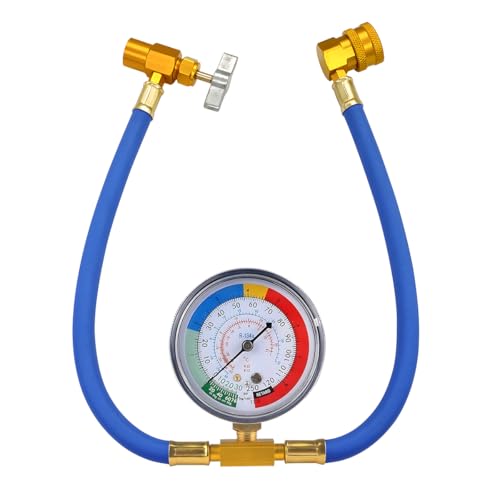
To safely recharge your car AC, first gather the right tools, including the correct refrigerant type and a pressure gauge, while wearing safety gear like goggles and gloves.
Confirm ambient temperature is above 55°F and the engine runs around 1500 RPM.
Locate and clean the low-pressure service port, then securely attach the recharge kit.
Add refrigerant in controlled bursts while monitoring pressure, verify cooling efficiency, and properly seal the port.
Following these precise steps minimizes risks and guarantees peak AC performance—you’ll find further detailed guidance ahead.
Table
- Main Points
- Gather Necessary Tools and Safety Equipment
- Check Ambient Temperature and Vehicle Specifications
- Locate and Prepare the Low-Pressure Service Port
- Connect the Refrigerant Dispenser and Monitor Pressure
- Add Refrigerant in Controlled Intervals
- Verify Cooling Performance and Secure Service Port
- Frequently Asked Questions
- Final Thoughts
Main Points
- Gather correct refrigerant, recharge kit with gauge, safety goggles, and gloves; verify vehicle manual for refrigerant type and system specs.
- Ensure engine runs at 1500 RPM, AC set to max cold, and locate and clean the low-pressure service port before connecting the recharge kit.
- Connect recharge kit securely to the low-pressure port, monitor for leaks, and open valve briefly to add refrigerant in controlled bursts.
- Monitor pressure gauge and vent temperature during addition to confirm proper refrigerant levels and effective cooling performance.
- After charging, tighten all connections, replace service port cap, dispose of refrigerant properly, and document the process for future reference.
Gather Necessary Tools and Safety Equipment

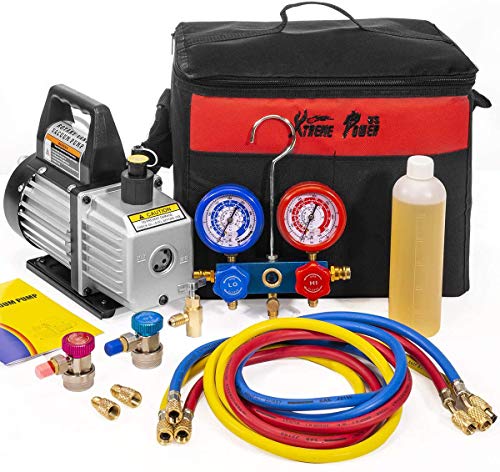
Before you begin recharging your car's AC system, make sure you gather all necessary tools and safety equipment to work efficiently and protect yourself. Start by selecting the correct refrigerant type—either R-134a or R-1234yf—as specified in your vehicle’s manual. Obtain a recharge kit designed for your AC system that includes a pressure gauge to monitor refrigerant levels precisely during charging. Always wear safety goggles and nitrile gloves to shield your eyes and skin from potential refrigerant exposure, which can cause harm. Locate the low-pressure port on your vehicle before starting; this is where you’ll connect the recharge kit. Preparing these essentials empowers you to perform the recharge safely, ensuring the AC system operates effectively while protecting your health throughout the process.
Check Ambient Temperature and Vehicle Specifications

Before you start recharging, make certain the ambient temperature is at least 55°F for effective refrigerant flow. Check your owner’s manual to identify the correct refrigerant type—usually R-134a or R-1234yf—and follow any specific guidelines for your vehicle model. Adhering to these specifications guarantees safety and peak AC system performance.
Ideal Temperature Range
Although recharging your car's AC system is possible in various conditions, you should perform the task only when the ambient temperature exceeds 55°F to assure accurate refrigerant pressure readings and peak system performance. The ideal ambient temperature assures reliable pressure readings, helping you avoid overcharging or undercharging. Always check your owner’s manual to confirm the exact refrigerant specifications, as improper quantities can degrade cooling performance. Remember, refrigerant levels drop over time, so timely recharges maintain efficiency.
 10 Tips to Keep Your Car AC Running Smoothly
| Ambient Temperature | Recommended Action |
|---|---|
| Below 55°F | Delay recharge |
| 55°F - 85°F | Ideal ambient temperature |
| Above 85°F | Monitor pressure carefully |
| Consult Manual | Verify refrigerant levels |
Adhering to this range safeguards your AC system’s longevity and effectiveness.
Vehicle Refrigerant Type
Two critical factors you must verify before recharging your car’s AC system are the ambient temperature and the specific refrigerant type your vehicle requires. Always avoid recharging below 55°F to guarantee system efficiency. Identify the correct refrigerant type—commonly R-134a or R-1234yf—by inspecting the engine bay sticker or consulting your owner’s manual. Vehicles before 1994 often use R-12, which demands specialized handling and must never be mixed with newer refrigerants. Before initiating a refrigerant recharge, check the pressure to confirm system needs. Overcharging can damage the compressor and reduce cooling performance, so use the correct amount specified in your owner’s manual. Prioritize safety by wearing protective gear, and verify your refrigerant type matches your vehicle’s specifications for peak, safe AC function.
Owner Manual Guidelines
When you prepare to recharge your car’s AC system, consult your owner’s manual closely to verify the exact refrigerant type and quantity required. This step guarantees you follow the manufacturer’s recommendations precisely, avoiding damage during the recharge process. Before starting, check the ambient temperature; do not proceed if it’s 55°F or below to assure peak system performance. Use the owner’s manual to locate the low-pressure port correctly, as its position varies between models. Also, understand the pressure specifications to maintain safe and effective levels.
- Confirm refrigerant type and volume from the owner’s manual
- Verify ambient temperature suitability before recharging
- Locate the low-pressure port per manufacturer’s guidance
- Follow recommended maintenance intervals
- Monitor pressures during the recharge process for safety and efficiency
Locate and Prepare the Low-Pressure Service Port

Locate the low-pressure service port, usually marked with an "L" on the larger hose near the compressor. Before connecting, remove the dust cap and clean the port to guarantee a secure, debris-free connection. Always attach the recharge hose firmly to prevent refrigerant leaks and wear safety gear to protect yourself.
Find Low-Pressure Port
Identifying the low-pressure service port is essential for safely recharging your car’s A/C system. This port allows you to connect the recharge kit and add refrigerant efficiently. To find and access it correctly:
- Locate the larger diameter hose between the accumulator and compressor marked with an “L.”
- Verify the engine is running and the A/C is set to maximum cold before proceeding.
- Remove the plastic cap carefully to expose the low-pressure port.
- Always wear safety goggles and gloves to protect against refrigerant exposure.
- Avoid contaminating the port by handling it with clean tools and hands.
Following these steps guarantees a safe and effective way to recharge the system without risking damage or injury.
Clean Port Before Use
Before connecting your recharge kit, thoroughly clean the low-pressure service port and its surrounding area to prevent dirt and debris from entering the A/C system. Locate the port on the larger diameter pipe linked to the AC compressor, marked with an “L.” Put on safety goggles before you start. Use a clean cloth to wipe off dust and contaminants carefully. Remove the plastic cap without damaging the port or threads. This step guarantees that refrigerant flows cleanly into the system, preventing contamination and potential damage.
| Step | Action |
|---|---|
| 1 | Locate low-pressure service port |
| 2 | Wear safety goggles |
| 3 | Clean port and surrounding area |
| 4 | Remove plastic cap gently |
| 5 | Inspect port for damage |
Attach Recharge Hose Securely
Now that the low-pressure service port is clean and ready, turn off the vehicle to prevent accidental engagement of the AC system. To attach recharge hose securely, follow these steps carefully:
- Locate the low-pressure service port in the engine bay, marked with an “L” on the larger hose from the compressor.
- Align the quick coupler of the recharge hose with the port.
- Press down firmly until you hear a click, confirming a proper fit.
- Verify the valve on the recharge hose is closed to prevent refrigerant leakage.
- Double-check all connections before starting the recharge process.
Connect the Refrigerant Dispenser and Monitor Pressure

Locate the low-pressure fill port, usually marked with an "L" on the left side of the engine bay, and clean the area thoroughly before attaching the refrigerant dispenser. Always wear safety goggles and gloves to avoid frostbite or chemical exposure. Next, securely connect the refrigerant dispenser to the low-pressure fill port. Start the engine, set the AC to maximum cold, and turn the blower fan to full speed to guarantee accurate pressure readings. Monitor the low-pressure gauge closely; you should see a reading around 25-30 PSI for proper compressor engagement. If the gauge doesn’t move, double-check the connection and allow the system a moment to stabilize. Staying precise here is key to safely charge the system and regain control over your car’s cooling freedom.
 Why Does Car AC Compressor Replacement Cost So Much?
Add Refrigerant in Controlled Intervals

Since adding refrigerant too quickly can cause overcharging and damage your AC compressor, you should introduce it in controlled, short bursts. When you add refrigerant in controlled intervals, follow these precise steps to maintain system integrity and avoid refrigerant leak:
- Confirm the engine runs at approximately 1500 RPM for accurate pressure readings
- Connect to the low pressure side and monitor the gauge closely
- Open the valve briefly to release refrigerant in short bursts
- Check for leaks continuously throughout the process
- Use a thermometer to verify temperature drop at the vents
This approach prevents overcharging, preserves compressor function, and optimizes AC systems’ cooling. Always remain vigilant to avoid refrigerant leak and maintain safety during the recharge.
Verify Cooling Performance and Secure Service Port
After adding refrigerant in controlled intervals, the next step is to verify the cooling performance and properly secure the service port. Start by locating the low-pressure service port, usually marked with an "L," and clean it thoroughly to prevent contaminants during refrigerant charging. With the AC system running at maximum fan speed and the coldest temperature, connect your recharge kit securely to this port. Use a thermometer to measure the vent air temperature— a noticeable drop confirms successful refrigerant charging and ideal AC performance. Throughout the process, monitor the pressure gauge closely to guarantee refrigerant levels stay within recommended limits. Properly securing the service port and verifying cooling performance assures your car’s AC delivers efficient, safe cooling without risking system damage or leaks.
Frequently Asked Questions
Is It Safe to Recharge Your Own Car AC?
You can safely DIY recharge your car AC by observing safety precautions, using the right tools, and recognizing symptoms of low refrigerant. Avoid common mistakes like overcharging, and always prepare thoroughly to protect yourself and your vehicle.
Do You Turn off Car to Recharge AC?
You shouldn’t turn off your car during car AC maintenance; keep the engine running to engage the compressor. Accurate AC system diagnosis and safe DIY recharge tips rely on proper refrigerant types and addressing common leaks effectively.
Do You Leave the Car Running When Adding Freon?
You should leave the car running when adding Freon to guarantee compressor operation and accurate pressure. Freon safety depends on AC running, correct refrigerant types, and monitoring temperature effects to prevent system damage and guarantee ideal cooling.
Do I Need to Vacuum Before Adding Refrigerant?
You should always perform the vacuum process before adding refrigerant to your AC system. It removes moisture and air, ensuring ideal cooling and protecting components. Follow maintenance tips and safety precautions specific to refrigerant types you use.
Final Thoughts
Now that you’ve carefully gathered your tools, checked temperatures, and connected everything just right, recharging your car’s AC might feel like a breeze—until you forget safety gear or misread pressure gauges. Ironically, the coolest ride comes from the hottest attention to detail. Follow each step precisely, and you’ll avoid turning a simple recharge into a costly repair. Remember, safety isn’t optional; it’s the real cold front keeping you comfortable.
 10 Best Solutions for Car AC Not Cooling
Reliable Floor Jacks on a Budget: Best Picks for Under $150
Top-Rated Floor Jacks Over $100: Built for Professionals, Priced for Smart Buyers
If you want to know other articles similar to Steps to Recharge Your Car AC System Safely you can visit the Air Conditioning Maintenance category.
Car AC Service Frequency: 3 Key Tips

Top 7 Car AC Services in Your Area

10 Best Solutions for Car AC Not Cooling

Why Does Car AC Compressor Replacement Cost So Much?

10 Tips to Keep Your Car AC Running Smoothly

5 Best Affordable Auto AC Repair Services

How to Get Mobile Car Air Conditioning Service

How to Tell Your Car AC Needs Service
Leave a Reply
This is also interesting