

How to Choose the Best Floor Jack Pad for Your Needs

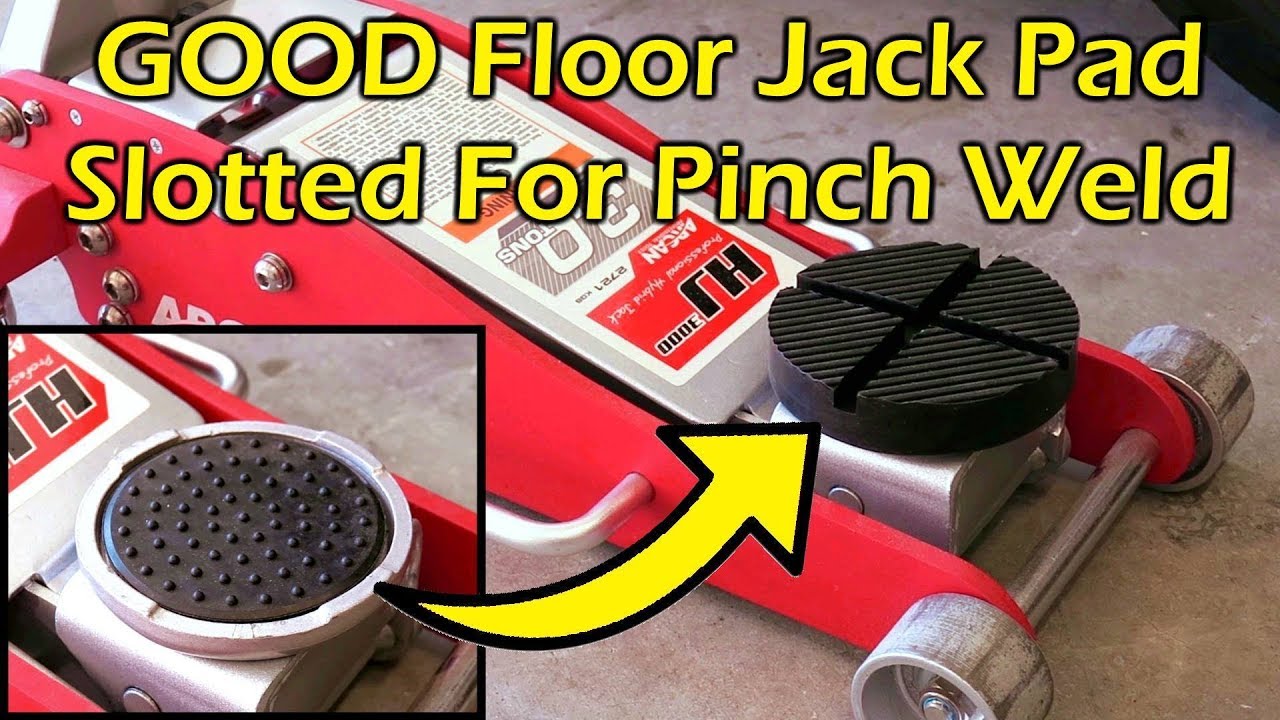
A floor jack pad is the block that sits between the jack saddle and the car's jacking point. It does two jobs: spread the load so the metal does not crease, and add grip so the car does not slide while it goes up. It does not add lifting height, and it does not make a jack stable on soft ground. Those are the jack's job.
What a floor jack pad actually does
Most jacks lift through a small metal saddle, often notched or cupped. Pressed directly against a rocker panel or a frame rail, that small contact area concentrates the whole weight of one corner of the car on a few square centimetres. A pad widens the contact patch and takes the sharp edge off the saddle.
- Spreads the load. A 125 mm pad has several times the contact area of a typical saddle.
- Protects the paint and the seam. The pinch weld under the doors is the part that dents first, and it is expensive to straighten.
- Adds friction. Rubber and polyurethane grip painted metal better than bare steel on steel.
What it does not do: it does not raise the car higher, it does not replace jack stands, and it does not correct a saddle that is too small or a jack that is overloaded. If the saddle does not sit flat on the pad, the pad is not the fix.
Rubber or polyurethane
Almost every pad on the market is one of these two materials, and the difference matters less than the fit.
| Material | Behaviour | Best for |
|---|---|---|
| Rubber | Softer, more compliant, better grip on painted metal; can tear if cut | Pinch welds and painted sills |
| Polyurethane | Firmer, more cut and oil resistant, less give on uneven contact | Frame rails and heavy use |
Both are solid elastomers. A pad described as "polyurethane foam" is the wrong product: foam compresses and takes a permanent set, which is exactly what you do not want under a loaded jack.
Size and fit
Three measurements decide whether a pad works on your jack:
- Diameter. It should match the saddle, not the car. A pad much wider than the saddle can rock; a pad narrower than the saddle puts the load back on a small area. Around 120-130 mm covers most 2-3 ton jacks.
- Thickness. Most pads are 20-30 mm. Remember that every millimetre of pad is a millimetre of lift you lose.
- Shape of the top. Flat, slotted or with a raised lip. This is the part that has to match the car, not the jack.
Slotted or flat
The pinch weld is the seam that runs under the doors, where the rocker panel meets the floor. It stands proud of the surrounding metal, so a flat pad presses directly on the seam. A slotted pad has a groove that straddles it and puts the load on the metal either side.
If your car's jacking points are the pinch welds, use a slotted pad. If they are flat frame rails or a rear axle, a flat pad is the right shape. Using a slotted pad on a flat rail concentrates the load on the two edges of the slot, which is the opposite of what you want.
Capacity
Match the pad's rating to the jack, not to the car's total weight. A 3-ton jack lifting one corner needs a pad rated for at least 3 tons. Purpose-made pads usually state a 2-3 ton rating; if a listing does not state one, treat it as unknown and keep looking. The same rule applies to any DIY substitute.
How to use a jack pad safely
- Check the pad before every use. A crack, a tear or a flattened groove means it is done.
- Centre the pad on the saddle. An off-centre pad tilts under load.
- Put the slot or the flat face against the car's jacking point, not against the saddle.
- Raise the jack until the pad touches, then look again before lifting. You want full contact, no gap and no rocking.
- Lift, then put jack stands under the car before you go under it. A pad does not hold a car up.
- Never stack two pads, and never use a pad to reach a jacking point that the jack cannot reach. That is how a car comes down.
Frequently asked questions
Do I need a pad if my saddle already has a rubber cover?
Not always. A saddle with a thick, intact rubber cover already spreads the load and grips. Add a pad when the cover is thin, hard, missing or notched in a way that presses on a seam.
Will a universal pad fit my jack?
Usually, if the diameter matches the saddle and the saddle is flat. Pads held by a pin or a recessed cup need the matching shape; a universal pad on those saddles can sit proud and rock.
Can I use a hockey puck instead?
A hockey puck is the classic substitute: hard rubber, about 76 mm across, cheap. It fits some saddles and many people use one without trouble. It also has no load rating and a small diameter, so on a 3-ton jack it concentrates the load more than a purpose-made pad. If you use one, check it for cracks and make sure it sits fully on the saddle. A purpose-made rubber pad is the safer choice for a car you care about.
Bottom line
Buy for fit, not for brand: a pad that matches the saddle diameter, states a capacity at least equal to the jack, and has the right top shape for your car's jacking points. Rubber for painted pinch welds, polyurethane for frame rails and heavy use. Then treat it as a consumable and replace it when it cracks. For the rest of the kit that goes with it, see the floor jack accessories guide.
Related posts
Buy the Best Napa Low Profile Floor Jack - Find the Right Jack for You!

Buy the Best Napa Aluminum Floor Jack for Your Automotive Needs

Buy the Best 5 Ton Floor Jack from NAPA Today!
Find Out Who Makes the Best Napa Floor Jacks

2 Ton Napa Floor Jack: The Best Jack for Your Needs

Find Genuine Napa Floor Jack Replacement Parts - Quick & Easy!

Buy the Best Napa 3 Ton Floor Jack for Your Shop

The Best 3.5 Ton Floor Jack from Napa - Shop Now!